
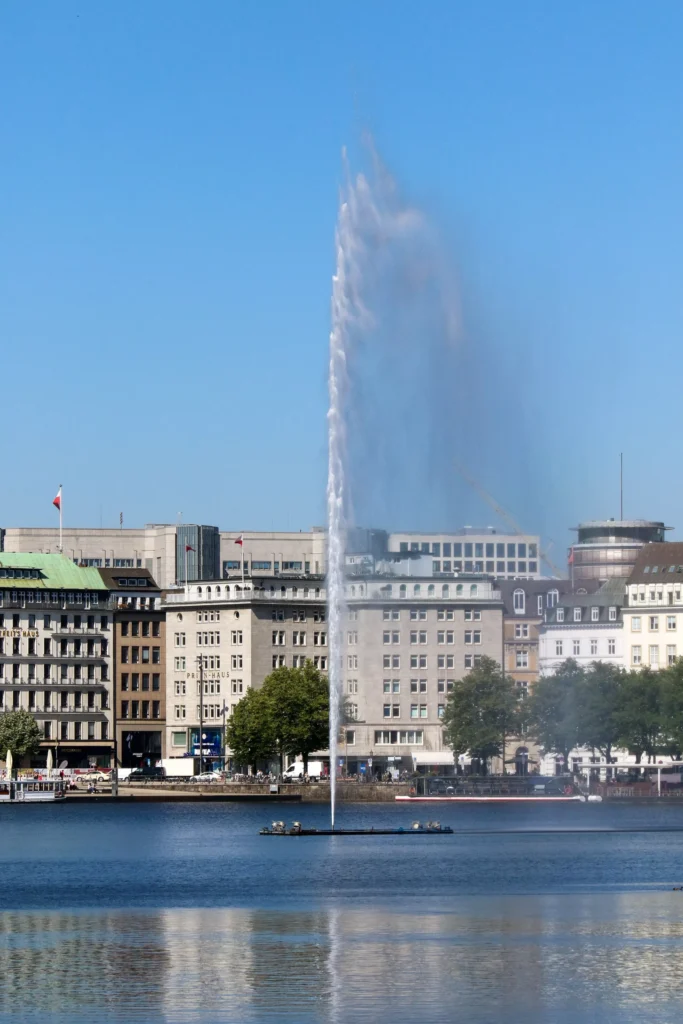
The history of Geneva is not a backdrop for brochures: it is a reading grid for the market. Each era has left a layer of building — and these layers are exactly what is sold and bought today, from the old-town house to the PAV apartment. Here are two thousand years of history, read through what they built.
Genava: the hill where it all began
The first written mention of Geneva is signed by Julius Caesar — 58 BCE, in the Gallic Wars: Genava, a strategic outpost on the Rhône. The city then clung to its hill, and would not come down from it for eighteen centuries. This longevity left a very real legacy: the old town, with St Pierre Cathedral and the Maison Tavel, today forms the market of absolute character — a finite stock, largely protected as heritage, where every sale is an event.
The Protestant Rome: when Geneva grew upwards
With Calvin and the Reformation, Geneva became the “Protestant Rome” in the 16th century — welcoming waves of Huguenot refugees who doubled its population… without the city being able to expand: hemmed in by its fortifications, Geneva grew upwards. The tall, narrow buildings of the old town, with their raised storeys, come from this period. This moment forged a DNA that has never disappeared: a dense, constrained, vertical city — where supply does not keep pace with demand. Readers of our market analysis will recognise the mechanism: it is five centuries old.
1850: the fortifications fall, the bourgeois city is born
In the mid-19th century, driven by the radical James Fazy, Geneva demolished its fortifications — freeing up, at a stroke, space that had been compressed for centuries. On the former glacis arose the “Fazy belt”: the grand, ordered buildings from the Rues Basses to Square du Mont-Blanc, followed by the bourgeois neighbourhoods extending towards Champel and Eaux-Vives — annexed to the city in 1931. This layer from the 19th and early 20th centuries is today the heart of the upmarket urban market: mouldings, cut stone, generous volumes — period character that commands a constant premium. Nearby, Sardinian Carouge tells its own story, Piedmontese and parallel.
1920: international Geneva changes demand
By hosting the League of Nations in 1920, followed by the UN and the constellation of organisations that came after, Geneva gained not just a status — it acquired a structurally international property demand: diplomats, officials, multinationals, a flow of arrivals that has never dried up. It is this layer that explains part of today’s Geneva prices: the city plays in the league of world capitals, with the territory of a small canton.
The post-war years: satellite estates and the invention of control
Facing the growth of the post-war boom years (the “Trente Glorieuses”), Geneva devised its response: satellite estates — Meyrin, considered the first in Switzerland, then Le Lignon with its spectacular near-one-kilometre block, one of the longest residential buildings in Europe. This was also the period when the canton forged the control tools that still govern the market today: the law on development zones (1957) — controlled prices for new-builds, inherited by every buyer of a new PPE (condominium) — then the LDTR, which protects the rental housing stock and governs the sale of tenanted flats. Understanding these laws means understanding that they are historical responses to the same constant: shortage.
Today: the PAV, the layer being written
The contemporary layer is being written before our eyes: the transformation of Praille-Acacias-Vernets, the largest urban project in French-speaking Switzerland, is turning former industrial wasteland into residential neighbourhoods for decades to come. In a century, people will read the PAV as we read the Fazy belt today — the built trace of an era. For today’s buyer, the lesson is the same as in every chapter: in Geneva, every layer of building is a distinct market, with its own enthusiasts, rules and prices.
The official grid exists — and it can be consulted
This reading by layers is not only ours: the canton keeps a systematic version of it, and hardly anyone thinks to consult it before buying. The cantonal architectural inventory lists, documents and assesses buildings built before 1985 — in practice, those over thirty years old that are not already subject to a protection measure.
The method is craft-like in the best sense of the word: combing through land-registry archives, building-permit applications and bibliographic sources; visiting and photographing each property; then assessing its heritage interest according to a four-value scale. Since 2021, more than thirty thousand buildings have been inventoried, and the work continues commune by commune.
One point is essential, and the canton says so itself: “The results of the architectural inventory have no legal value and are indicative.” A well-rated building is not thereby protected. But — and this is where the nuance becomes market information — protection proposals originate from the monuments and sites department on the basis of this inventory. A high assessment is therefore not a status: it is a leading indicator.
In practice, for anyone buying an older property with a view to renovating it, the inventory record can be consulted on the genevepatrimoine.ch portal and via the dedicated SITG layer. It will tell you what the State has already seen in that building — often well before you have had any plans drawn up. The details of the protection regimes are covered in our article on Geneva’s architecture and heritage.
What history tells the buyer
To sum up the grid: the protected character of the old town and the boroughs — rare, regulated, heritage-listed; the 19th-century bourgeois layer — urban standing par excellence; the post-war modern layer — generous volumes, more accessible prices, renovation costs to be assessed; and controlled new-builds — transparent but regulated. Four layers, four markets — and twenty-three communes on the Left Bank where you can find them, profile by profile. History does not explain everything about the price of a Geneva property; but it does explain why there are so few properties. Technical terms in the glossary.