
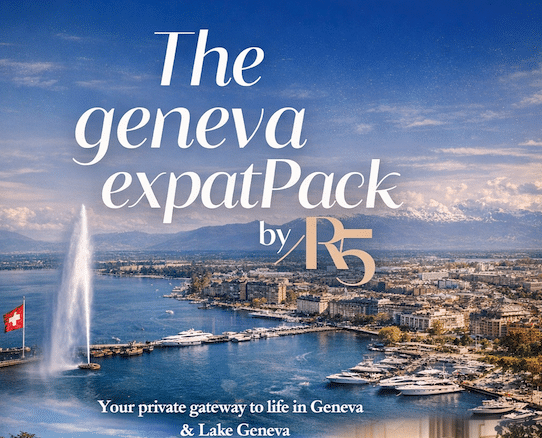
Moving to Geneva raises three questions in this order: where to live, which school, and — the one most guides skip — whether you are legally allowed to buy. Switzerland restricts property purchases by foreign residents, and the answer depends on your permit, not your budget. Here is the honest sequence, from a broker who works the Left Bank every day.
Can you actually buy in Geneva?
This is the first thing to settle, because it changes everything else. Under the federal act on the acquisition of real estate by persons abroad — known as Lex Koller — the right to buy a home depends on your residence status. In broad terms, holders of a C permit and EU/EFTA nationals holding a B permit and living in Switzerland may acquire a principal residence like a Swiss citizen. Non-EU B permit holders may generally buy the home they will live in themselves, but not a second home or a rental investment. Cross-border commuters and people living abroad face far tighter rules, and a purchase made in breach of these rules can be unwound years later.
Two practical consequences. First, establish your status before you fall in love with a property — not after. Second, if your situation is not clear-cut, have it confirmed in writing by a notary before signing anything; in Geneva the authorisation regime is handled by the cantonal authorities and a file can take weeks. We set out the full framework in our detailed guide to buying property in Switzerland as a foreign national.
Where to live: the Left Bank, honestly compared
Geneva is small, and twenty minutes separate very different worlds. On the Left Bank — the lake’s southern shore, where our agency works — the choice usually narrows to a handful of areas.
Cologny is the address international families name first: large plots, lake views, absolute discretion, and the highest prices in the canton. Vandœuvres offers the same countryside calm slightly further from the lake, with a village character and almost no apartment stock. Collonge-Bellerive and Vésenaz suit families who want the lake, schools and shops within walking distance rather than a large estate.
Closer to town, Champel and Florissant combine period apartment buildings, the university hospital and a ten-minute commute to the centre — the choice of many professionals who prefer city life to a garden. Chêne-Bougeries and Conches sit between the two: residential, green, and well served since the Léman Express opened. Each of these areas has its own page in our commune atlas, with local prices, schools and transport.
Schools: the decision that usually settles the address
For most international families the school comes first and the postcode follows. Geneva offers an unusual concentration of international and bilingual private schools, most of them on or near the Left Bank, alongside a free public system taught in French that works well for younger children who will pick up the language quickly.
Two pieces of advice we give every relocating family. Apply early — the best-known schools have waiting lists that do not care about your start date. And visit before choosing a home: a school run that looks trivial on a map can be twenty-five minutes each way at eight in the morning, and it will shape your daily life far more than an extra bedroom.
Renting first, buying later — usually the right order
Unless you already know Geneva well, rent for the first year. The rental market is tight and unglamorous, but a year on the ground tells you what no guide can: which side of the lake suits your commute, whether you want a garden, how your children settle. Buying in the first three months, from abroad, on a weekend visit, is how people end up reselling at a loss — Geneva’s transfer costs and the tax on capital gains make a quick resale expensive, as our article on the Geneva capital gains tax shows.
How buying works in Switzerland
The process differs from the Anglo-Saxon one on three points that surprise most newcomers.
The notary is central and neutral. A Swiss sale is completed by a public deed before a notary who serves the transaction, not one of the parties. There is no exchange of contracts as in England, and no title company as in the United States.
You need real equity. Twenty per cent of the price as a minimum, of which at least half must come from savings outside your pension assets — and the bank will assess affordability using a theoretical interest rate of around five per cent, far above the market. Low rates do not raise the amount you may borrow; our mortgage calculator applies the real Swiss rules in a couple of minutes.
The best properties never reach a portal. On the Left Bank a significant share of transactions is concluded privately, before any listing. If you are looking in the upper segment, a portal search alone will show you only what did not sell discreetly — which is why we run a confidential off-market search for buyers.
Start here
Browse what is currently available among our properties for sale and new developments, look at what we have actually sold to judge our track record, and if you already own in Geneva, our online valuation gives you a documented range with the calculation behind it.
One dedicated broker, absolute discretion, and the Left Bank as our home ground. Tell us your timing, your schools and your budget — we will tell you honestly whether what you want exists at that price.