
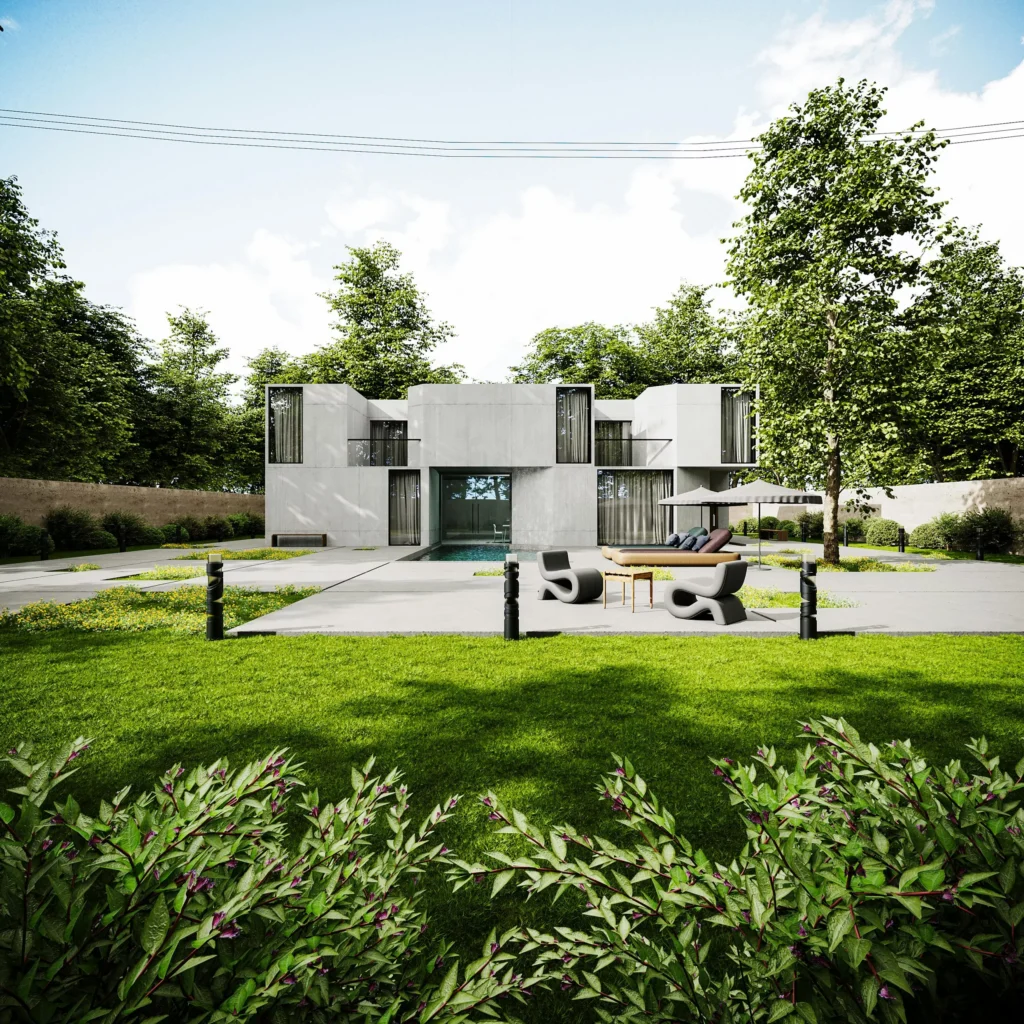
A sale price is not simply decreed — it is calculated, then tested against the market. And the calculation is not the same depending on the property: an apartment is valued by the weighted square metre, through comparison; a house is valued by its intrinsic value — the land plus the construction, measured in SIA cubic metres; a rented property is valued at its yield value. Here are the three methods that professionals and banks actually use in Geneva, with a complete example for each.
The three values of a property
Before any calculation, a point of vocabulary. The market value is the price the market agrees to pay today — this is what you are looking for. The intrinsic value is what the property is technically worth: land plus construction, less wear. The yield value is what the rents bring in, capitalised. Depending on the property, one dominates: the comparative method for the apartment, the intrinsic method for the villa, the yield method for the rental building — and your buyer’s bank will calculate its own figure separately. A solid price stands up under all three readings.
Apartment: the calculation per weighted m²
The comparative method, in three steps:
- 1. Establish the weighted surface area — the living space counts in full, the balcony for roughly half, the cellar for a quarter: the detail is in our guide to calculating weighted surface area (and the definitions in the one on types of surface area);
- 2. Find the price per m² actually paid — not the one from listings: the one from the commune’s recorded transactions, refined by the sales closest to your address;
- 3. Adjust — floor and view, condition and renovations, parking, charges and the PPE (condominium) renovation fund: each difference from the comparable properties is quantified, upwards or downwards.
Example (illustrative figures): an apartment with 85 m² of living space, a 12 m² balcony and an 8 m² cellar has a weighted surface area of 85 + 6 + 2 = 93 m². If comparable sales in the neighbourhood were signed at around CHF 13’000/m² weighted, the base is 93 × 13’000 = CHF 1’209’000 — to be adjusted afterwards: a high floor with an open view pushes it upward, a PPE with a thin renovation fund pulls it downward.
House: the calculation in m³ SIA, plus the land
For a house, direct comparison quickly reaches its limits — no two houses are alike. Professionals therefore use the intrinsic value, in three blocks:
- The built volume, in m³ — measured according to the SIA 416 standard, the Swiss reference for calculating surfaces and volumes: this is the famous “cube”;
- the replacement value of the construction — the volume multiplied by a price per m³ that depends on the standard: simple, good, or high-end construction — materials, techniques, finishes;
- less depreciation — the loss in value linked to age and maintenance: roofing, façades, heating, kitchens and bathrooms each have their own lifespan, and a renovated property “regains” its value;
- plus the land — its surface area multiplied by the price per m² of land in the area, again drawn from transactions, and adjusted for the zone, the remaining building rights and the configuration of the plot.
Example (illustrative figures): a house of 900 m³ SIA with a construction cost of CHF 1’000/m³ is worth CHF 900’000 new. Twenty years old and normally maintained, it suffers depreciation of around 20%: the construction is valued at CHF 720’000. Its 600 m² plot, in an area where the m² trades at CHF 1’800, adds CHF 1’080’000. Intrinsic value: CHF 1’800’000. In Geneva, where land is the scarce commodity, it often weighs — as here — more heavily than the house itself; this is also why the market can pay above the intrinsic value: it is buying the plot and its potential as much as the walls.
Incidentally, the bridge between the two units: the cost per m² of a construction is obtained by multiplying the cost per m³ by the height of the storeys — which is why building professionals think in cubic terms, more faithful to what is actually built, while listings speak in habitable m².
Rented property: the yield value
For a property sold with its lease — or a rental building — the buyer is an investor, and calculates differently: the annual rental income, capitalised at a rate reflecting the risk and current rates. Example (illustrative figures): CHF 36’000 in net rent per year, capitalised at 3%, gives 36’000 ÷ 0.03 = CHF 1’200’000. The rate makes all the difference: the same rental income at 2.5% is worth CHF 1’440’000. Selling an occupied property is therefore played out on this ground — that of yield, not of love at first sight.
From calculation to listed price
The calculation provides a basis; the price is set by comparing it against the real market: recorded sales in the area, online competition at the time of listing, and the depth of demand for that type of property. This is where the classic mistakes happen — starting from a cantonal average that describes no one in particular, basing the figure on listings that never sold, or “leaving some margin” by inflating the price, which misses the decisive first weeks. The right approach: a calculated basis, a clear positioning, and a price-defence strategy ready before the first offer. To find out what the sale will actually leave you, capital gains tax included, the net seller simulator does the calculation.
What the calculation does not see — and the expert does
No formula can measure an unobstructed view, rare quiet, dual-aspect light, potential for extension, or the constraints of a zone. This is where judgement comes in: that of a professional estimate, carried out on site, which weighs the calculation against knowledge of the micro-markets — and, for estate or contentious matters, a formal expert appraisal. Start with a confidential audit of your property, with no obligation; and to place your calculation within today’s market, browse the properties for sale on the Left Bank. The technical terms — market value, SIA cube, capitalisation rate — are defined in the glossary.